
Miami-Dade Recent Arrest Sources
Miami-Dade County publishes no single roster of everyone arrested in a given day or week. So there is no true countywide arrest log to check. The place to start is the Miami-Dade Corrections and Rehabilitation in-custody search. That tool answers one question well: is this person in MDCR custody right now? It does not cover the whole arrest, though. An arrest in Miami-Dade might come from the Sheriff's Office. It might also come from a city police department, the Florida Highway Patrol, or another agency. Whoever makes the arrest keeps the report. The booking and custody record belongs to MDCR. The Clerk of Courts holds whatever happens next in court.
Booking moves through a set order. A person is transported, processed, fingerprinted, photographed, screened, charged, and classified. The county's post-arrest explanation covers the intake step at Turner Guilford Knight Correctional Center. That step can stretch for hours when the jail is busy. So someone can be arrested and still not show up in a search. The two specialized views below cover how to handle that gap.
| Source | Actual coverage | Best use |
|---|---|---|
| Current MDCR roster | People shown in county custody | Confirm a current booking and location |
| Arrests Last 24 Hours | No separate named feed; live-roster verification | Check a very recent arrest |
| Police Blotter | Official records, courts, and selective news | Trace bookings beyond the live window |
| Corrections reports | Aggregate booked and released trends | Understand volume, not find a person |
Booking charges come straight from the jail's intake record at the time of arrest in Miami-Dade County.
Search the Miami-Dade Arrest Roster
Miami-Dade County runs its inmate lookup through an official service page that hands you off to the MDCR application. Type a last name and a first name. Each field needs three characters at minimum. Keep the search tight. A narrow name query cuts down on look-alike results, and a jail number helps when you later chase a full record or a court case in Miami-Dade.
One result can show quite a lot. The listing may include name, date of birth, race, sex, location, charges, bond, jail number, booking date, booking time, and a mugshot. Treat each field loosely, though. Booking time reflects intake, not necessarily the street arrest. Bond figures can lag a fresh booking, and a detainee's location may shift after classification, court transport, transfer, or release.
| Field | How to use it |
|---|---|
| Last name | Enter at least three characters; check variants. |
| First name | Narrow common surnames. |
| Date of birth | Distinguish similar names. |
| Jail number | Use for MDCR and Clerk follow-up. |
| Booking time | Compare intake timing, not assumed arrest time. |
Start with the exact name. Then compare birth date, jail number, booking time, and facility before trusting a match. Read charges and bond as intake data rather than a final order. Nothing showing up? Allow for processing time and contact MDCR, since the person may have been released, transferred, booked under corrected details, or held in a different Miami-Dade facility.
The official MDCR search form appears below.
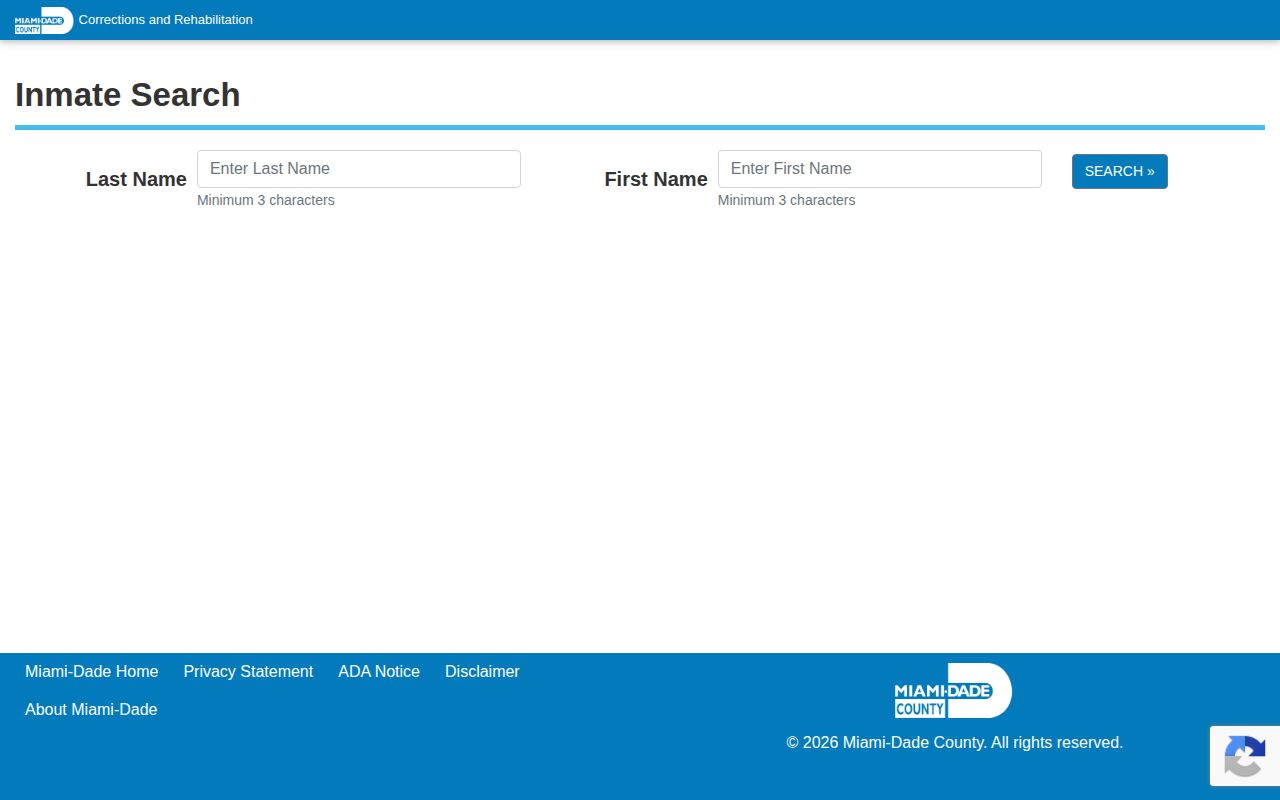
This neutral form is the right entry point for a Miami-Dade arrest search. It is not a gallery or a permanent archive.
MDSO and MDCR list no dedicated public booking-roster app. The web search itself works fine on a phone. Visitation and communications apps handle other jobs entirely. For custody alerts on one person, the county-linked VINELink Custody Check is the tool to use.
When Miami-Dade Arrests Appear
Booking at Turner Guilford Knight follows a fixed script. MDCR lists every step in order: identity checks, fingerprints, photographs, health screening, property inventory, charge entry, and housing classification. That gap explains why a police report can surface before the jail result does. Arrest paperwork and corrections data come from separate agencies.
Bond and release move slowly too. MDCR warns bond may not be offered right away. Even after bond posts, release can take several hours, since payment confirmation, court work, transport, and release checks each add time. A roster change is a cue.
The official intake explanation from the county spells out each booking step.
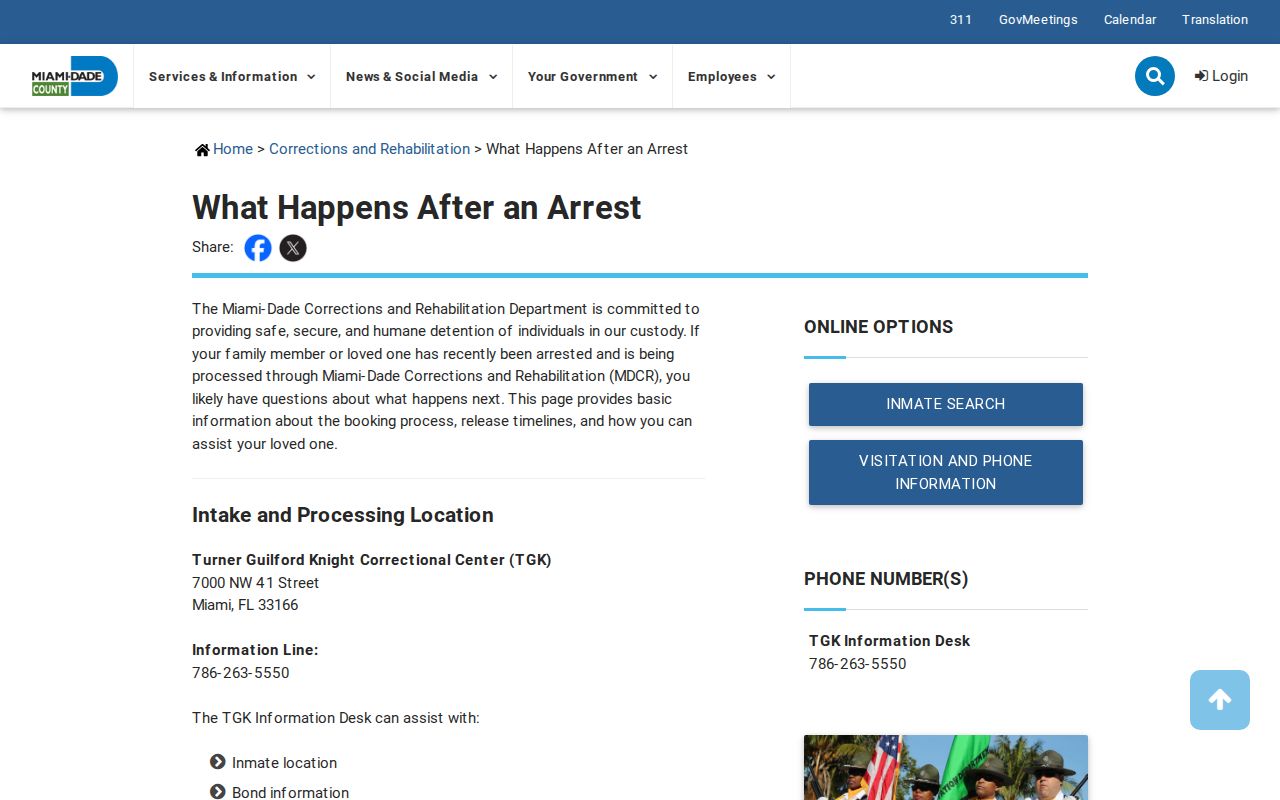
It links the initial arrest to TGK processing without claiming an exact update interval.
Where Miami-Dade Arrests Are Published
Start with official sources. The MDCR roster covers current county custody. The arresting agency keeps the original report and affidavit. The Clerk's Criminal Justice Online Search holds docket events and dispositions. Florida corrections covers state custody. News or private archives add context without being complete or authoritative.
| Channel | Photo | Scope |
|---|---|---|
| MDCR roster | Mugshot stated | Official current county custody |
| Arresting agency | Request-dependent | Official report and affidavit |
| Clerk CJIS | No gallery | Case index; certified record separate |
| Florida DOC | May show offender image | State prison or supervision |
| Local news | Selective | Event-driven coverage |
| Private archives | Often | Unofficial, possibly stale |
News outlets pick their cases. Miami Herald, Local 10, NBC 6, and WSVN publish selected crime stories built on affidavits, statements, hearings, or press releases, so a story's date can differ from the booking. Private archives work differently. Mugshots.com and Mugshots.zone may retain a Miami-Dade booking photo after release, so verify anything there against MDCR, the arresting agency, and the Clerk.
Recent Arrests by Miami-Dade City
City police write their own incident and arrest reports. Anyone accepted into county custody lands in MDCR. The compact roster rarely names the city, so pair the city records unit with the county search.
- Miami Recent Arrests: Miami Police records and MDCR booking.
- Hialeah Recent Arrests: Hialeah Police Records Unit and county custody.
- Miami Gardens Recent Arrests: Miami Gardens Police, JustFOIA, and MDCR.
Miami-Dade reaches well beyond Miami itself, covering dozens of cities plus large unincorporated zones. A city name attached to an arrest tells you little on its own, since it rarely reveals which agency actually made the arrest.
Miami-Dade Arrest Record Fields
A Miami-Dade booking record captures the basics of an arrest in custody. It lists the arrested person's name, the charge, bond, booking photo, and time fields. For the rest of the story, ask the arresting agency or the Clerk of Courts for the case result.
| Field | Meaning and limit |
|---|---|
| Name and birth date | Matching aids; confirm similar names. |
| Jail number | MDCR identifier for later searches. |
| Booking date and time | Intake timestamp that may follow arrest. |
| Charges | Charges, not convictions. |
| Bond | Data that may lag or change. |
| Location | Current placement, subject to movement. |
| Mugshot | Identification image where permitted. |
| Disposition | Found through the court, not roster. |
- Booking
- Jail intake after an arrest.
- Bond
- A court-set release condition.
- Arraignment
- A hearing addressing charge and plea.
- Disposition
- The final way a charge ended.
- Detainer
- Another authority’s request that may affect transfer or release.
Miami-Dade Mugshots After Arrest
MDCR shows a mugshot in its in-custody results. Not every arrest comes with one. Intake may still be underway. A person may have been released, may be shielded by law or policy, or may never have passed through MDCR at all. Local reporting has also covered a dispute over withholding some booking photos of officers. What gets published can hinge on the subject and the record itself.
A booking photo helps with identification, nothing more. Once someone drops off the live roster, contact MDCR Central Records for jail material and the arresting agency for its report or image. A person later moved into state custody may show up in the Florida Department of Corrections search. That photograph comes from a different stage of custody.
No booking photos are rehosted here. Private archives run stale, wrong, or thin. For identity, release, and outcome, rely on the official record.
Request a Miami-Dade Arrest Record
Ask whichever office created the item. MDCR keeps booking, jail-card, custody, movement, and release records, while MDSO or a city department holds its own arrest report and affidavit. The Clerk handles court dockets, case warrants, and certified dispositions. Name the person, date, agency, and record.
- Check the live roster and note jail number and booking date.
- Identify the office that made the desired record.
- Use the MDCR records route or proper agency channel.
- Ask for a cost estimate before a broad search.
- Compare the result with CJIS and obtain a certified disposition if needed.
MDCR charges 15 cents for a single-sided page. Double-sided pages run 20 cents. Certified or color pages cost a dollar, and video or CD media run a dollar as well. After 20 minutes, labor or service costs can apply. Florida law allows reasonable copy and extensive-use charges, but no turnaround is promised. The county's GovQA request selector lets you route your request.
It handles booking and jail-card requests, while police and court records sit with other custodians.
Florida Arrest Records and Removal
Florida Statutes section 119.07 governs inspection, copying, exemptions, and redaction. Public does not mean permanent online. Juvenile, victim, medical, sealed, expunged, and protected data receive separate handling under the statute. Florida juvenile law can bar electronic publication of certain juvenile booking photos.
Florida Statutes section 901.43 targets publishers that post booking photos and charge for removal. A written demand with identity and disposition proof starts a free removal process in qualifying cases. Skip intermediaries selling speed. Sealing and expungement are court processes, not search-engine edits. FDLE uses a certificate-first process, lists a 75-dollar fee, and estimates about 12 weeks for a complete packet. Eligibility rides on the case. Private copies never erase automatically. Mugshots.com and Mugshots.zone describe free correction or removal routes for some outcomes, but those policies leave official records untouched.
Florida GS2 sets minimum retention: booking records, commitment and release lists, and incarceration files generally keep one anniversary year after release. Jail docket books are permanent, while investigative files vary. Leaving the live search doesn't destroy the record.
Order matters: correct or seal the official source first. Then use a publisher's documented free route and refresh search results after the source changes.
Miami-Dade Arrest Warrants and Wanted Notices
The MDSO site lists no general most-wanted roster or public warrant form. Older county warrant pages redirect, so treat them as dead ends. The Clerk's CJIS search covers case, defendant, jail-number, police-number, and calendar data. The MDSO Warrants Bureau confirms operational status. An electronic index is not a certified court record.
If a warrant in your own name worries you, talk to an attorney or the court. Arrange a lawful resolution from there. Never approach or try to detain a wanted person. Send tips through the agency or Crime Stoppers, and call emergency services for any immediate threat. The county's official Clerk interface displays those tabs.
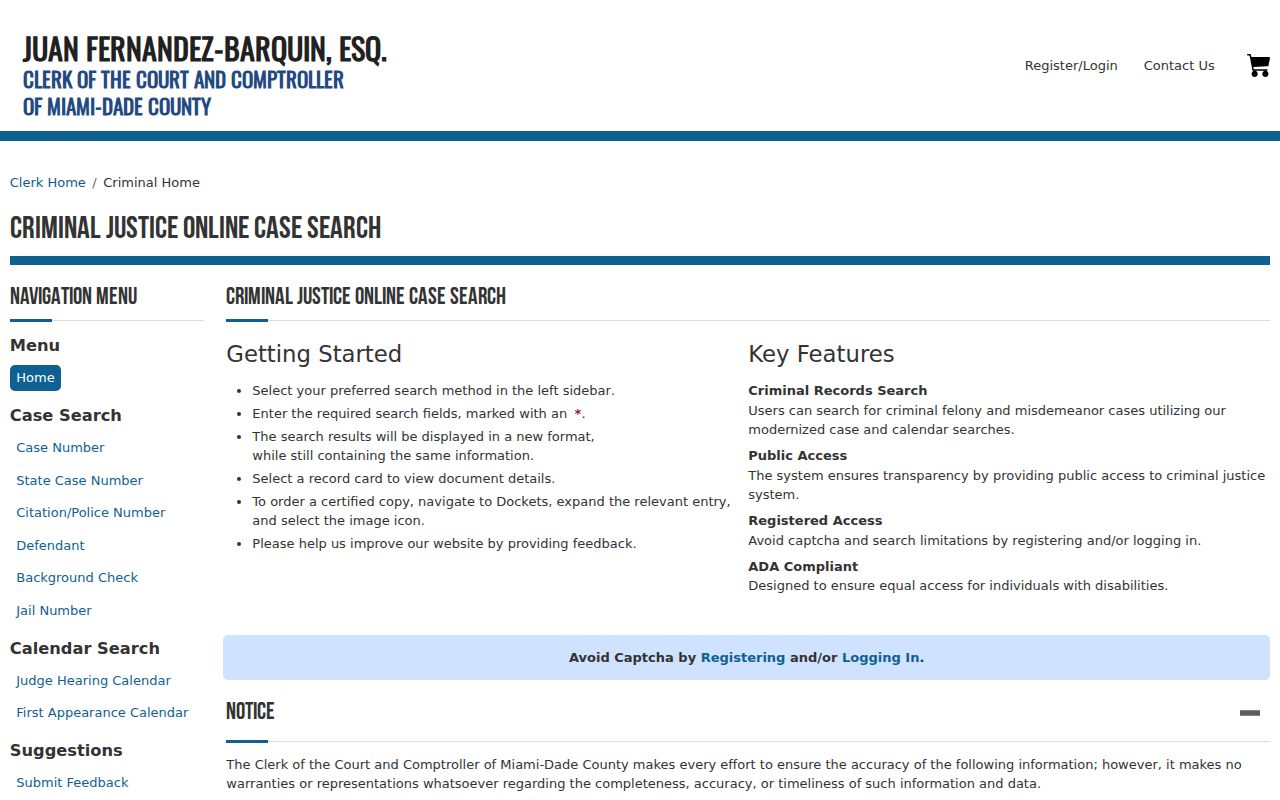
Its tabs link booking identifiers to court data.
After a Miami-Dade Arrest
Once a case is filed, the court record takes over. The Clerk splits Circuit Criminal from County Criminal. It also maps weekday, weekend, and holiday court paths. CJIS may list events missing from a custody roster, though electronic access is never the certified record. A certified disposition shows how the charge ended.
First appearance, arraignment, bond review, filing decisions, pleas, trial, dismissal, and sentencing can each reshape what intake suggested. The recent arrest is only the opening record.
Miami-Dade Custody Beyond Arrest
No single search covers all custody. MDCR tracks current county jail custody. Florida corrections covers state prison and supervision, not a new booking. The BOP locator handles federal prisoners and carries no county mugshot roster. The ICE locator covers certain immigration custody, and it wants exact identifiers.
MDCR aggregate reports may show immigration-detainer counts. A detainer can affect release or transfer. But aggregate data cannot identify a person, and federal or immigration movement may fall outside county VINE alerts.
Miami-Dade Arrest Data Without Names
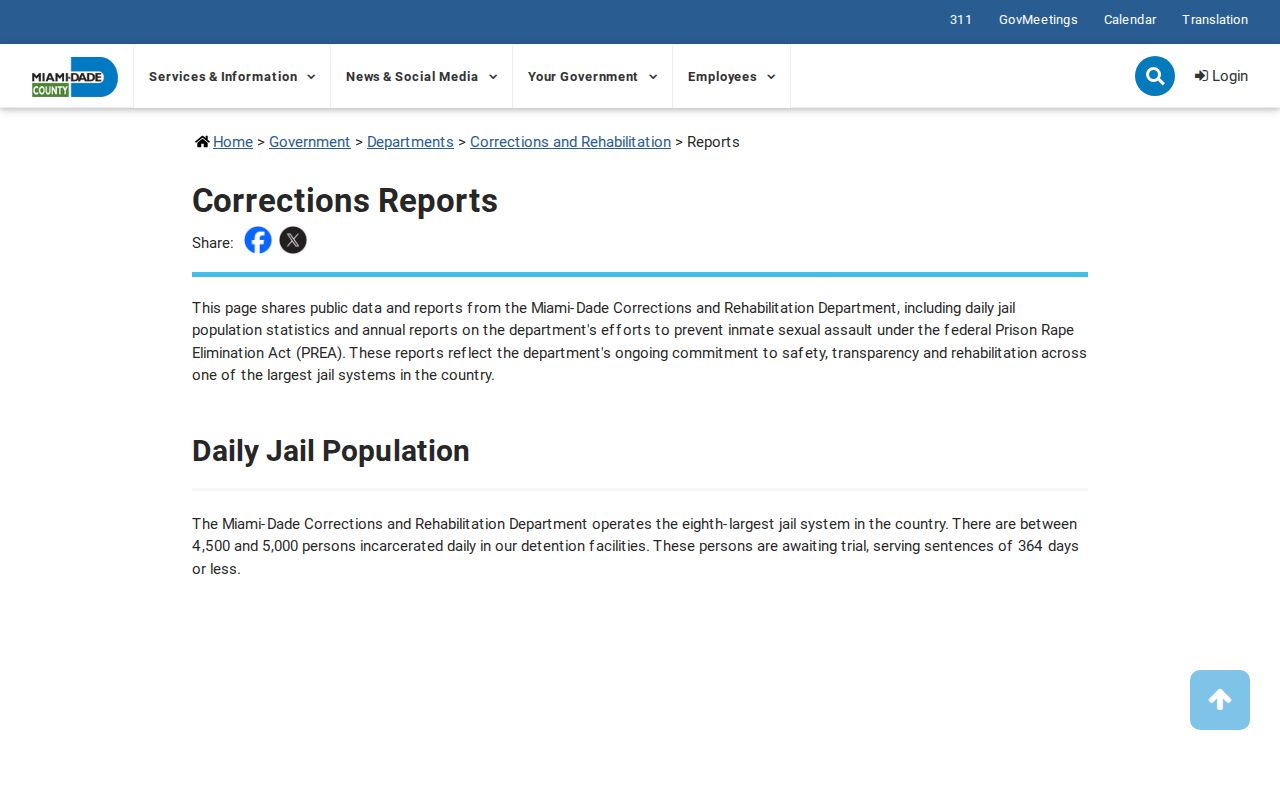
The MDCR Corrections Reports page posts aggregate booked, released, and in-custody totals with trend charts. It captures jail workload, not faces. That's data without a named roster.
That aggregate scope rules out a person-level blotter.